Why Veterans Face Unique Barriers to Addiction Treatment — and What Specialized Care Addresses
Ask a lot of veterans why they didn’t get help sooner, and you’ll hear some version of the same thing: “I was supposed to be able to handle it.” The military teaches people to push through pain, keep it together, and never be the weak link. That training saves lives in combat. Back home, when the problem is drinking or pills instead of enemy fire, it can keep someone stuck for years.
Addiction doesn’t care how tough you are. But the reasons veterans struggle to get treatment are different from the reasons civilians do, and those differences matter when it comes to actually getting better.
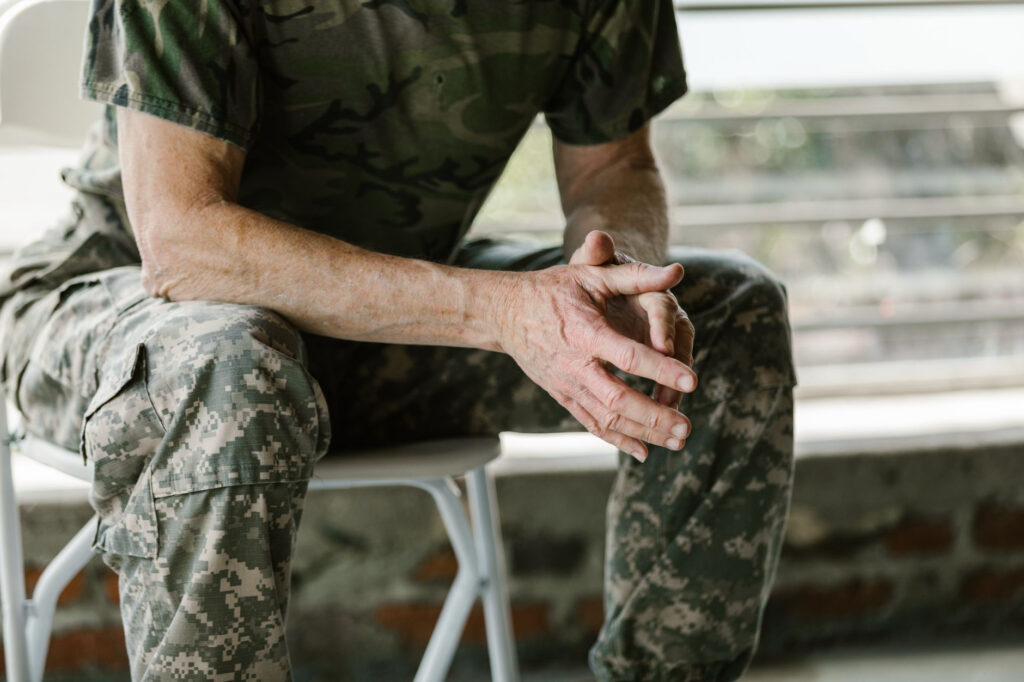
The barriers civilians don’t face
Start with what put many veterans at risk in the first place. Combat exposure, injuries, and repeated deployments leave a mark. A lot of veterans came home carrying trauma, chronic pain, or both, and substances became the way to manage what nobody trained them to carry.
Pain is a big piece of it. Veterans are often prescribed opioids for service-related injuries, and for some, that prescription slowly turns into a dependency. The transition out of the military adds its own strain. You go from a tight structure and a clear mission to figuring out civilian life, sometimes without the people who understood you best.
Then there’s the culture. In the military, asking for help with a mental health or substance problem can feel like admitting you’re broken. Some worry it will cost them a security clearance, a job, or the respect of people they served with. That fear doesn’t vanish when the uniform comes off.
The National Institute on Drug Abuse points to these same roadblocks. Drawing on a federal report, NIDA lists limited access to care, gaps in insurance coverage, stigma, fear of consequences, and a lack of confidential services as major barriers for service members and veterans. None of those are about willpower. They’re about a system and a culture that make asking for help harder than it should be.
Why so many veterans go without care
The result is a lot of people who need treatment and never get it. In a SAMHSA analysis of veterans’ behavioral health drawing on 2020 national survey data, more than 90% of veterans with a substance use disorder did not receive treatment. That isn’t because help doesn’t exist. It’s because the barriers above pile up until reaching out feels impossible.
Trauma is often tangled into it. According to the VA’s National Center for PTSD, in fiscal year 2024 about 14% of men and 24% of women treated by the VA were diagnosed with PTSD. And among recent Afghanistan and Iraq veterans, NIDA reports that 63% of those diagnosed with a substance use disorder also met the criteria for PTSD. For a lot of veterans, the drinking or the drug use isn’t the whole problem. It’s what they reached for to quiet something else.
What specialized veteran care actually addresses
This is why general addiction treatment sometimes falls short for veterans, and why programs built with them in mind tend to work better.
Specialized care starts by understanding military culture instead of asking someone to explain it. The staff know what a deployment does to a family, why a loud noise can send someone’s heart racing, and why “just talk about your feelings” lands differently for a person trained to bottle them up. That understanding builds trust faster, and trust is where treatment actually starts.
Good veteran-focused programs also treat the trauma and the substance use together, rather than one and then the other. They manage service-connected pain without leaning on the same medications that caused trouble in the first place. And they handle the practical things that stop people from getting care, like coverage. If you’re looking for addiction treatment that accepts Tricare and works with VA referral pathways, that alone removes one of the easiest excuses to keep putting it off.
Peer connection matters too. Being in a room with other veterans who get it, without having to translate, can reach someone that a well-meaning stranger can’t.
What it looks like
Picture a veteran a few years out of service. He’s got a job, a family, and a nightly routine of drinks that has grown into something he can’t stop. He tells himself real soldiers don’t need help for this. His sleep is wrecked, his temper is short, and a bad memory keeps surfacing that he’s never told anyone about.
What finally moves him isn’t a lecture. It’s finding a program where the counselor is a veteran too, where his benefits cover the care, and where nobody treats his drinking as a character flaw. For the first time, getting help doesn’t feel like surrender. It feels like a mission he can actually complete.
When and how to get help
You don’t have to hit rock bottom to deserve care. If you’re using alcohol or drugs to get through the day, or to outrun something from your service, that’s reason enough to talk to a professional. Ask whether a program has real experience with veterans and whether they treat mental health alongside substance use. Not every place does.
If you’re a veteran in crisis, or you’re worried about one, the Veterans Crisis Line is open around the clock. Call 988 and press 1, or text 838255. You can also reach the 988 Suicide & Crisis Lifeline any time by calling or texting 988. You served. Letting someone help you now isn’t weakness. It’s the next smart move.
The part worth remember
The same grit that carried a veteran through service can turn against them when the enemy is a bottle or a pill, because it whispers that needing help means failing. It doesn’t. The bravest thing a lot of veterans ever do is walk into treatment and say the hard thing out loud. The right program meets them there, in a language they already speak.
Sources
● National Institute on Drug Abuse (NIDA), Substance Use and Military Life (DrugFacts) — among recent Afghanistan and Iraq veterans, 63% of those diagnosed with a substance use disorder also met criteria for PTSD; barriers to care for service members and veterans (limited access, insurance gaps, stigma, fear of consequences, lack of confidential services) drawn from a 2012 Institute of Medicine report. https://nida.nih.gov/publications/drugfacts/substance-use-military-life
● Substance Abuse and Mental Health Services Administration (SAMHSA), Supporting the Behavioral Health Needs of Our Nation’s Veterans (based on 2020 National Survey on Drug Use and Health) — more than 90% of veterans with a substance use disorder did not receive treatment. https://www.samhsa.gov/blog/supporting-behavioral-health-needs-our-nations-veterans
● National Center for PTSD, U.S. Department of Veterans Affairs — in fiscal year 2024, about 14% of male and 24% of female veterans treated by the VA were diagnosed with PTSD. https://www.ptsd.va.gov/professional/treat/essentials/epidemiology.asp
[mailerlite_form form_id=1]